Architecting the AI Receptionist: A Technical Blueprint for Dental Practice Efficiency (Revised)
Dental clinics often lose patient volume due to missed calls and manual scheduling. Implementing an AI-driven receptionist system automates intake and reduces no-shows.
GA
Gaurav Rahate
Principal Systems Architect
Executive Direct Answer
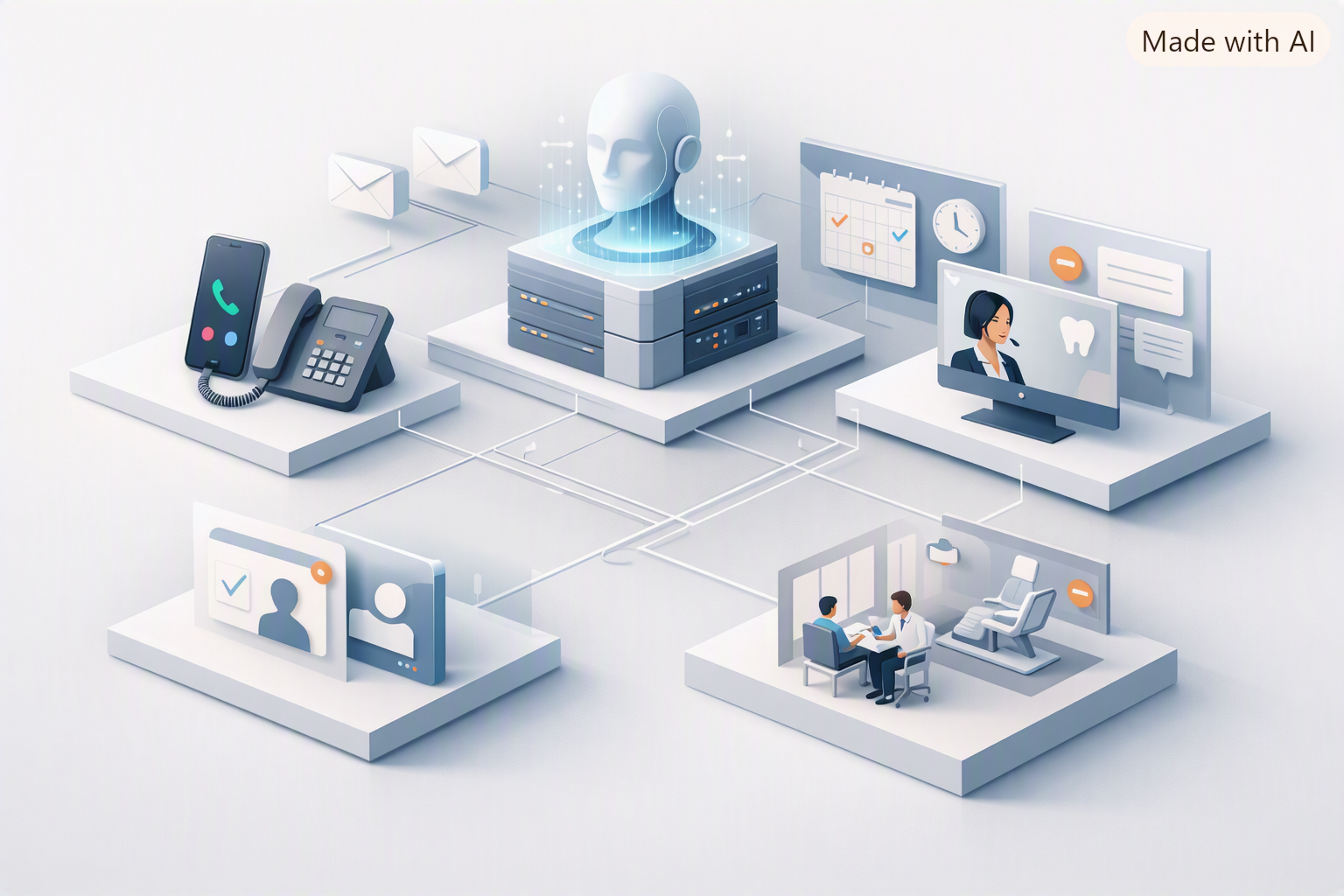
A dental AI receptionist functions by integrating an LLM-powered voice and text interface directly with your Practice Management Software (PMS). By utilizing API-driven synchronization, the system performs real-time availability checks, manages appointment writes, and executes automated follow-ups. This architecture ensures that patient interactions are handled 24/7, reducing the burden on front-desk staff while maintaining accurate, synchronized scheduling data that minimizes chair vacancy and improves operational consistency.
Key Takeaways & Core Principles
Prioritize API-first PMS integration to ensure real-time data synchronization between AI agents and clinical scheduling.
Continue Reading
Related Research & Insights
Explore more architecture briefs, systems guides, and enterprise reports.
Manual administrative tasks drain clinical resources. Learn how to architect secure, AI-driven automation workflows to synchronize data and reduce operational overhead.
Bi-weekly strategic research on AI automation, CRM architectures, and modern digital engineering.
Implement robust fallback protocols to transition complex or sensitive inquiries to human staff, ensuring clinical accuracy.
Utilize multi-channel communication (voice and SMS) to confirm appointments and reduce no-show rates through automated status updates.
Maintain strict data privacy by ensuring all AI-patient interactions comply with regional healthcare data protection regulations.
The Operational Impact of Communication Gaps in Dental Practice
Manual reception workflows in dental clinics are frequently interrupted by high call volumes, leading to missed opportunities for patient acquisition. When front-desk staff are occupied with chairside assistance or patient check-ins, incoming calls often go to voicemail, resulting in potential patients seeking care elsewhere. Furthermore, the reliance on manual appointment confirmation processes creates a lag between patient intent and schedule finalization, directly correlating to increased chair vacancy rates. Transitioning to an automated, system-integrated model allows clinics to move from reactive, manual scheduling to a proactive, synchronized operational state.
Architectural Prerequisites for Dental AI Integration
Successful deployment requires a secure, reliable technical foundation. RAHATE Enterprises emphasizes the following architectural requirements:
API Connectivity: The AI system must interface with the PMS (e.g., Dentrix, Curve Dental) via secure APIs to read availability and write new appointments.
Data Pipelines: Establishing encrypted pipelines is critical for real-time synchronization. All data in transit must be protected to maintain patient privacy.
Infrastructure: Utilizing modern cloud environments ensures the scalability and uptime required for 24/7 reception services.
Integration Configuration Example
SYSTEM SPECIFICATION / CODE
interface AppointmentRequest {
  patientId: string;
  requestedTime: string;
  procedureCode: string;
  status: 'pending' | 'confirmed';
}

async function syncWithPMS(data: AppointmentRequest) {
  // Logic to interface with PMS API endpoints
  return await pmsClient.post('/appointments', data);
}
Deploying 24/7 Intelligent Patient Intake and Triage
AI-driven voice and text interfaces act as the first point of contact. By configuring Large Language Models (LLMs) with practice-specific context, the system can handle routine scheduling, FAQs, and triage. Triage logic should be programmed to distinguish between routine check-ups and emergency inquiries, routing the latter to designated clinical staff immediately. This ensures that the AI maintains a professional, human-like standard while adhering to the clinical constraints of the practice.
Automating Appointment Lifecycle Management
Reducing no-shows requires dynamic, multi-channel engagement. The system should trigger automated SMS or voice reminders based on the status of the appointment within the PMS. If a patient needs to reschedule, the AI provides a self-service interface that checks real-time availability, preventing the need for manual back-and-forth. Once an action is taken, the PMS is updated automatically, closing the feedback loop and ensuring the schedule remains accurate.
Monitoring, Maintenance, and System Resilience
Long-term stability relies on continuous oversight. Clinics must implement logging to monitor conversation quality and API connectivity. Fallback protocols are essential; if the AI encounters an edge-case inquiry it cannot resolve, the system must gracefully escalate the interaction to a human staff member. Regular iterative refinement of the conversational model, based on patient feedback and practice-specific terminology, ensures the system remains effective as the clinic grows.
Large-scale database migrations often trigger service-halting locks. By adopting the Expand-and-Contract pattern, engineers can decouple schema changes from application logic.
RAHATE Enterprises helps businesses move from disconnected digital tools and manual processes towards structured, connected systems using AI automation, CRM, custom software, websites and digital marketing.
Whether you need intelligent AI automation, an integrated CRM architecture, or custom enterprise software, RAHATE Enterprises engineers unified infrastructure tailored to your exact operational workflows.